Posts

Showing posts with the label Reading

Reading Notes Part B- Nine At A Blow

Image
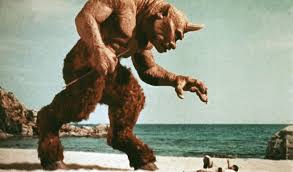
 The Key of Gold by Josef Baudis (1922) Nine At A Blow  I really enjoyed reading this story because I think oftentimes the little guy gets overlooked. In this tale a tailor who was out of work flung a stocking at a table of flies, killing nine flies at once. From there he etched in to a belt "Nine at a blow." The next day he ventured out since he had no work. Along the way he bought a finch, and received milk and cheese. As he napped a giant came along awaking him to ask if he had really killed nine in one blow. The tailor said yes. The giant was intrigued and wanted a contest to see who was stronger. They competed in two events. The first was to see who could throw a stone farther. The giant heaved a stone and it did not come down for an hour. The tailor heaved his to his finch and it never came down. Next the giant crushed a stone to dust, the tailor crushed his cheese and turned his into water. The giant was amazed and they ventured to the next city together. Along the way...

Reading Notes Part A- The Bear, the Eagle, and the Fish

Image
 The Key of Gold by Josef Baudis (1922).  The Bear, the Eagle, and the Fish This story was somewhat confusing to follow. Between all the characters and family tree you never knew who the count was selling off. With that being said the basics of this story is that a count had three daughters. The count was a gambler and after losing all his money would hunt in the woods. Though he would get lost and rely on animals to save him from the woods. Though he had to give up one of his daughters each time. This continued until the count finally ran out of daughters to give away. They one day had a boy. They looked after him dearly. He grew up and learned of what the count had done. So he saddled his horse in search of his sisters. Along the way he meet each one and his brother in laws. They were all sons of a powerful king. They had been turned into thee animals by an evil magician. The son promised to try and turn them back. Each brother in law gave them a piece of themselves, fur, fe...

Reading Notes Part B-The Cock That Wished to Become Pope

Image
 Italian Popular Tales by Thomas Frederick Crane (1885). The Cock That Wished to Become Pope This story was somewhat boring to read, but I thought it had a hidden message in it most would not see. In this tale a Cock decides he wants to become Pope. He journeys to Rome to accomplish this. Along the way he meets four different animals, a hen, a cat, and a weasel. They journey to Rome spending one night in a witches house until they are kicked out. At this point the weasel and cat decide the journey is not for them. The hen and cock continue to Rome eventually showing up to announce he will be Pope. At this point a sexton directs them into the sacristy, he locks them in. He caught them both twisted their necks and cooked them for dinner. Thats simply the story.  Though this may be a little dry and direct there is a message I feel most readers overlooked. Just because you think you can do something and have a crowd with you does not mean it is the best idea. Often times when many...

Reading Notes Part A- Water and Salt

Image
  Italian Popular Tales by Thomas Frederick Crane (1885). Water and Salt When I first began to read this story I thought it would be much like other kings and daughter tales. Though this one took a very interesting turn. Within this Italian tale a king asks his three daughters how much they love him. One replies as much as her eyes, the next as much as her heart, and the last as much as water and salt. He was furious with the last daughters answer and ordered for her to be killed. Though her sisters spared her telling the executioners to kill a dog instead and bring back her clothes. They did this, but her father over the years felt guilty. During those years the daughter lived with a magician, where she found a prince to marry. The day before her wedding she agreed to kill the magician, which left her house covered in gold. The next day at her wedding her father was in attendance. She ordered everyone to have water and salt except her father. He would not eat without those tw...

Reading Notes Part B- Elidore

Image
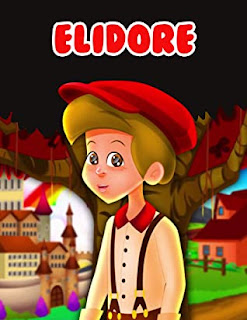
  More Celtic Fairy Tales by Joseph Jacobs with illustrations by John D. Batten (1895). Elidore There was once a young boy who studied under Monks so that one day he could become a Monk himself. Though he was very poor at learning his ABC's and would forget all his studies. The Monks punished the boy every time he forgot something. He became feed up with these practices and ventured into the woods. There he discovered a land of sport and play. Upon permission from the King of the joyous land he would spend some time with the little people and some time with his mother. Though one day his mother encouraged him to steal a ball which she thought was made of gold. The boy followed her orders and took a ball. Though he was caught red handed, by two little men. From that point on he would never return to the land of play and sport. As the years past we eventually became a Monk. People from all over ventured to hear the stories of his time in this mysterious land. He missed that maje...

Reading Notes Part A Helig's Hollow

Image
 The Welsh Fairy Book by W. Jenkyn Thomas with illustrations by Willy Pogány (1908). This tale focuses on Helig's daughter, Gwendud. She was very beautiful and loved by many, especially Snowdon, son of a baron. They loved each other tremendously but she would not marry him because he did not have a gold collar. Tathal, her suitor was determined to produce a gold collar. He worked it in a mischief snake like manner. He ended up stabbing one of the prisoners in the back and stealing his collar. Upon returning home he claimed they had been robbed by a group. She finally agreed to marry him, though tragedy struck at their feast. Flood waters began to slowly rise through the cellar. Moments later the seas rushed upon the land and everyone in attendance had to run for their lives. The next morning they awoke to the sun shinning upon where their hollow had been. It was no longer there, instead buried by the deep waters of the sea.  Photo provided by: Historic UK  ...

Reading Notes Henny-Penny- Part B

Image
English Fairy Tales by Joseph Jacobs with illustrations by John D. Batten (1890). This story was super funny to me especially after I looked up pictures to use fro my blog. A lot of the images that popped up were for Henny Penny fryers. This all makes sense because this whole story focused on a group of animals mostly birds, such as a duck trying to reach the King to alert him the sky is falling. Though along the way the group runs into a wolf who says they are going the wrong way. He takes them in the opposite direction and leads them one by one into a dark cave killing each of them except for Henny Penny. She wises up and turns and runs away. This story has a significant message that all should keep in mind. Though we should be able to trust everyone we come into contact with we sadly cannot. Keep in mind who you are speaking with and ensure you can trust them before risking anything.  Photo provided by: Illustrations for Children  https://www.pinterest.com.au/alittleout/ill...

Reading Notes- English Fairy Tales: The Three Little Pigs Part A

Image
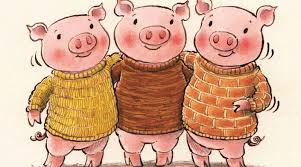
 Story source: English Fairy Tales by Joseph Jacobs with illustrations by John D. Batten (1890). I selected to write about this story because growing up this was one of my favorite tales to hear. After re reading this tale for the first time in years I forgot just how long and detailed it is. The lessons found within in it are also something every individual should take with them throughout life. The story is funny seeing just how much the wolf controls. He gets his way with each pig until he reaches the third. This is the wisest of them all, and this lays the foundation for what people need to carry in life with them. This pig realizes he physically does not compete with the wolf and needs to outsmart him. Just like in life when we compete for things wether on the playing field or for a job, we must highlight and utilize our talents. This piggy outsmarts the wold each time he arrives, eventually frustrating him to the point he is willing to come down a burning chimney. As this sto...

Reading Notes California and the Old Southwest- Part A

Image
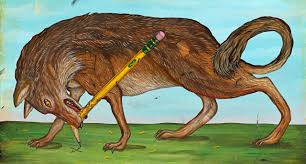
Southwestern and California Legends unit. Story source: Myths and Legends of California and the Old Southwest by Katharine Berry Judson (1912). Coyote Creation Stories I really enjoyed reading through these short Native American stories. I selected the California and Southwestern legends in particular since that region is where I call home. These creation stories focused on how Coyote and Eagle created the world.  In the first story Coyote and Eagle went back and forth on what the world would need. Coyote created the world too flat, Eagle claimed he needed a place to perch. When eagle soared the sky his feathers dropped down creating trees. They then discussed on the fate of humans. Coyote and Eagle created man together but disagreed on the lifespan of humans, forever or an end. Coyote ended up winning stating man would never come back.  In the second tale Coyote found out man was cold and needed warmth. He ventured eastward and returned with Fire Stone. In the beginning, Sun ...

Reading Notes Uncle Remus and Brer Rabbit- Part B

Image
 Uncle Remus and Brer Rabbit by Joel Chandler Harris, with illustrations (1906). Arguably the best-known Uncle Remus tale is "The Wonderful Tar-Baby Story," in which Brer Fox successfully entraps Brer Rabbit by setting a tar-baby out on the big road right across Brer Rabbit's path. Brer Rabbit becomes confounded with the tar-baby's obstinate refusal to exchange pleasantries. He hits the tar-baby only to become entangled in the black tar. About this time Brer Fox makes his appearance on the road and hints that Brer Rabbit will be his dinner. In characteristic fashion, Uncle Remus ends the tale abruptly, leaving young John in suspense. Several days later, after questioning Uncle Remus about Brer Rabbit's fate, John learns that Brer Rabbit narrowly escaped death by begging Brer Fox to do anything but throw him into the "brier-patch." A gullible Brer Fox does exactly that and quickly realizes his mistake when he sees Brer Rabbit emerge up the hill from him, ...

Reading Notes Uncle Remus and Brer Rabbit- Part A

Image
Uncle Remus and Brer Rabbit by Joel Chandler Harris, with illustrations (1906).  Joel Chandler Harris, celebrated fiction writer and Georgia newspaperman, was born on December 9, 1848 in the town of Eatonton, Georgia as the illegitimate child of Mary Ann Harris and an Irish laborer. Despite gaining international fame, chiefly due to his animal folktales told through the voice of Uncle Remus, Harris's personal nature was decidedly more reticent. Throughout his life he suffered acute embarrassment due to his short stature, shocking red hair, and severe stammer. While plagued by his insecurities, which no doubt contributed to his frequent refusals to give public readings, Harris was naturally inclined toward humor and practical joking. As a youth he was known for being a clever prankster, a trait that would later manifest itself in the characters of Brer Rabbit, Brer Fox, and the other "creeturs" that populate his Uncle Remus tales. Harris moved to Turnwold Plantation in 186...

Reading Notes The Three Hunters- Part B

Image
The Three Hunters Tibetan Folk Tales by A.L. Shelton with illustrations by Mildred Bryant (1925). This story is a little odd. The tale goes there was once three brothers who were all hunters. Their three wives, and one sister lived with them. One day they brought home a deer and gave the sister the leg. She cracked up the leg and made amazing bone marrow. The two older wives were upset and planned to kill her. So the next time their husbands left they killed her, though the youngest wife did not partake. On the way home the men saw a bird tweeting out the same tune. They began to think it was trying to tell them something. They asked if it was their sister and it replied yes. They then knew their sister was dead, but her sole lived in this bird. They went home and found the youngest wife crying, though she would not say what happened. They confessed to her that they knew all that happened and later killed the two older wives.  Photo provided by Wikipedia Commons  https://commo...

Reading Notes The Tiger and the Frog- Part A

Image
The Tiger and the Frog Tibetan Folk Tales by A.L. Shelton with illustrations by Mildred Bryant (1925). This was a very funny story to read. The tale goes that there was once a frog and tiger who crossed paths. The frog was scared but did not back down. He claimed he was the King of Frogs and was stronger than the tiger. They competed in two events to see who was better. The first they jumped across the river, the frog won. Secondly they threw up. The tiger coughed up water and the frog coughed up tiger hair. He claimed he had eaten a tiger yesterday. So the tiger ventured on his way eventually running into a fox. The fox laughed at him. Saying he could kill the frog in one quick step. So they tied their tales together to go get the frog. As the fox approached he stated, "You're a great fox. You haven't paid your toll to the king to-day nor brought any meat either. Is that a dog you've got tied to your tail and are you bringing him for my dinner?" This sacred the t...

Reading Notes Two Losses- Part B

Image
 Two Losses Georgian Folk Tales, by Marjory Wardrop (1894). I really enjoyed this story, it might even be my favorite for the whole semester. In this tale their is a scholar and a boat captain aboard a vessel. As a big storm approaches the captain barks out orders. The scholar can not understand him and after the storm passes asks the captain if he had ever learned to speak correctly. A few hours later an even stringer storm appears shrining a leak in the boat. The captain goes up to the scholar and ask if he knows how to swim. The scholar says no. The captain informs him that his crew and himself will swim ashore safely and he will die. He states he should have learned to swim instead of being able to speak correctly.  For me this story depicts todays world of being street smart vs book smart. In my opinion some of the smartest individuals in the world are actually street smart and have very little academic knowledge. Though a good balance of the two will lead one far in life...

Reading Notes The Story of the Fisherman- Part A

Image
The Story of the Fisherman The Arabian Nights' Entertainments by Andrew Lang and illustrated by H. J. Ford (1898).  This story focuses on a fisherman so old and so poor that he could scarcely manage to support his wife and three children. He went every day to fish very early, and each day he made a rule not to throw his nets more than four times. A large cloud of smoke appears after crying out to a Genie, a glass jar appears. A huge monster comes out, he begs for saving. The story basically goes on to where the Genie is going to kill the fisherman. Though the fisherman order the genie to tell him a story. The fisherman then plays a wonderful trick on the genie, which then transitions into the fisherman as storyteller, with the genie as his audience. This was a pretty confusing story to follow but I like when the little guy in stories wins. In this case the fisherman was able to overcome and end up not getting killed. It seems his life is much better now even after all his...

Reading Notes Siddhartha Leaves- Part B

Image
 Siddhartha Leaves  The Life of Buddha by Andre Ferdinand Herold (1922). This story depicts the events that occurred between Siddhartha and a horse named Kanthaka. Siddhartha wanted to escape the city to seek friends, wealth, and life. He would be leaving both his father and his son. The horse he would be taking was his father's horse that he rode into battle many times. This was an amazing horse. As he saddled the horse and rode into the dark night the animal was sure to not make a noise, for the city slept. Leaving his father, his son and his people, Siddhartha went forth from the city. He felt no regret, and in a steady voice, he cried: "Until I shall have seen the end of life and of death, I shall not return to the city of Kapila." This story sent me the message that sometime people need to get away for awhile and find themselves. In this instance he was looking for others, wealth, and to just experience life. I think it is beneficial for everyone to get out...

Reading Notes Part A- First Encounter

Image
 The Life of Buddha by Andre Ferdinand Herold (1922). First Encounter This story depicts the events of the Prince, Siddhartha's first experience with the gods and old age. Upon knowing what beauty the world may hold his father sent him off in a chariot. All the young and beautiful people were the only ones allowed to fill the streets. The gods became jealous and sent down an old man in his path. Upon seeing this old man the prince had many questions. he asked his driver if this would be his fate one day too. The driver was confused by the gods and responded with, "That which mars beauty, which ruins vigor, which causes sorrow and kills pleasure, that which weakens the memory and destroys the senses is old age. It has seized this man and broken him. He, too, was once a child, nursing at his mother's breast; he, too, once crawled upon the floor; he grew, he was young, he had strength and beauty; then he reached the twilight of his years, and now you see him, the ruin that is...

Reading Notes Part B- Worship and Blessing

Image
The Forgotten Books of Eden, edited by Rutherford H. Platt, Jr. (1926): The First Book of Adam and Eve 23-24-25. Worship and Blessing This whole tale focuses on Adam's conversation with God for mercy. Over and over Adam can be seen beginning with the Lord to forgive him and except him. Adam and Eve even fashion an alter made out of rocks and leaves. Here they give an offering to God in return of their trespasses. They cry out, "Forgive us our trespass 1 and our sin, and look upon us with Thine eye of mercy. For when we were in the garden our praises and our hymns went up before Thee without ceasing. But when we came into this strange land, pure praise was no longer ours, nor righteous prayer, nor understanding hearts, nor sweet thoughts, nor just counsels, nor long discernment, nor upright feelings, neither is our bright nature left us. But our body is changed from the similitude in which it was at first, when we were created. Yet now look upon our blood which is offered upon ...

Reading Notes Part A- The Fall

Image
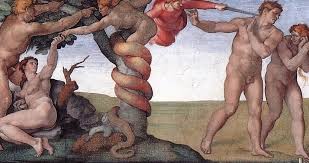
 King James Bible (1611): Genesis 3. This tale describes the events that lead to Adam and Eve disobeying God's orders. In the garden, Eve encounters a serpent who convinces her to eat the tree’s forbidden fruit, assuring her that she will not suffer if she does so. Eve shares the fruit with Adam, and the two are immediately filled with shame and remorse. This can be seen in the story where they describe hearing gods voices in their head. While walking in the garden, God discovers their disobedience. After cursing the serpent, he turns and curses the couple. Eve, he says, will be cursed to suffer painful childbirth and must submit to her husband’s authority. Adam is cursed to toil and work the ground for food. The two are subsequently banished from Eden. I grew up learning about this tale in Sunday school and found it so amazing at the time. How hard can it be to listen to simple directions? Now that I am older I can see how temptation seeps into peoples lives and how easy it can be...

Reading Notes- The Escape Part B

Image
Apuleius's Golden Ass, as translated into English by Tony Kline (2013). This tale describes the escape of Lucius and the woman. These two had been held prisoner by an old woman. The donkey worked up the courage to break free from his harness after using the robbers encouragement. As the donkey breaks free he the old woman with her hawk like eyes sees him. As he runs by with al this might she reaches out to grab a rope. To much amazement she is able to hold on reigning him back in. Though with much fight the donkey uses his hind legs to kick her down. Though she has not given up. He drags her along the ground as she screams out for help. His courage and resilience to break free is used when the girl mounts his back. She yells out to the sky “O gods above,’ she cried, ‘help me now in my desperate plight. And you, crueler Fortune, cease your fury at last. I should have atoned enough in your eyes given all these piteous torments I’ve endured. And you, protector of my life and freedom, ...